
Bookkeeping Services for Small Business: Financial Guide
Short answer
To choose bookkeeping services for a small business, prioritize providers that evaluate six core service dimensions, including trustworthiness, capability, and efficiency. Next, confirm they enforce standard internal controls by separating approval, accounting/reconciling, and asset custody to ensure at least two sets of eyes review every transaction. Finally, verify that their recordkeeping system supports critical tax functions-such as tracking deductible expenses and preparing financial statements-using either single-entry or double-entry accounting methods.
Evaluating Accounting and Bookkeeping Service Providers#
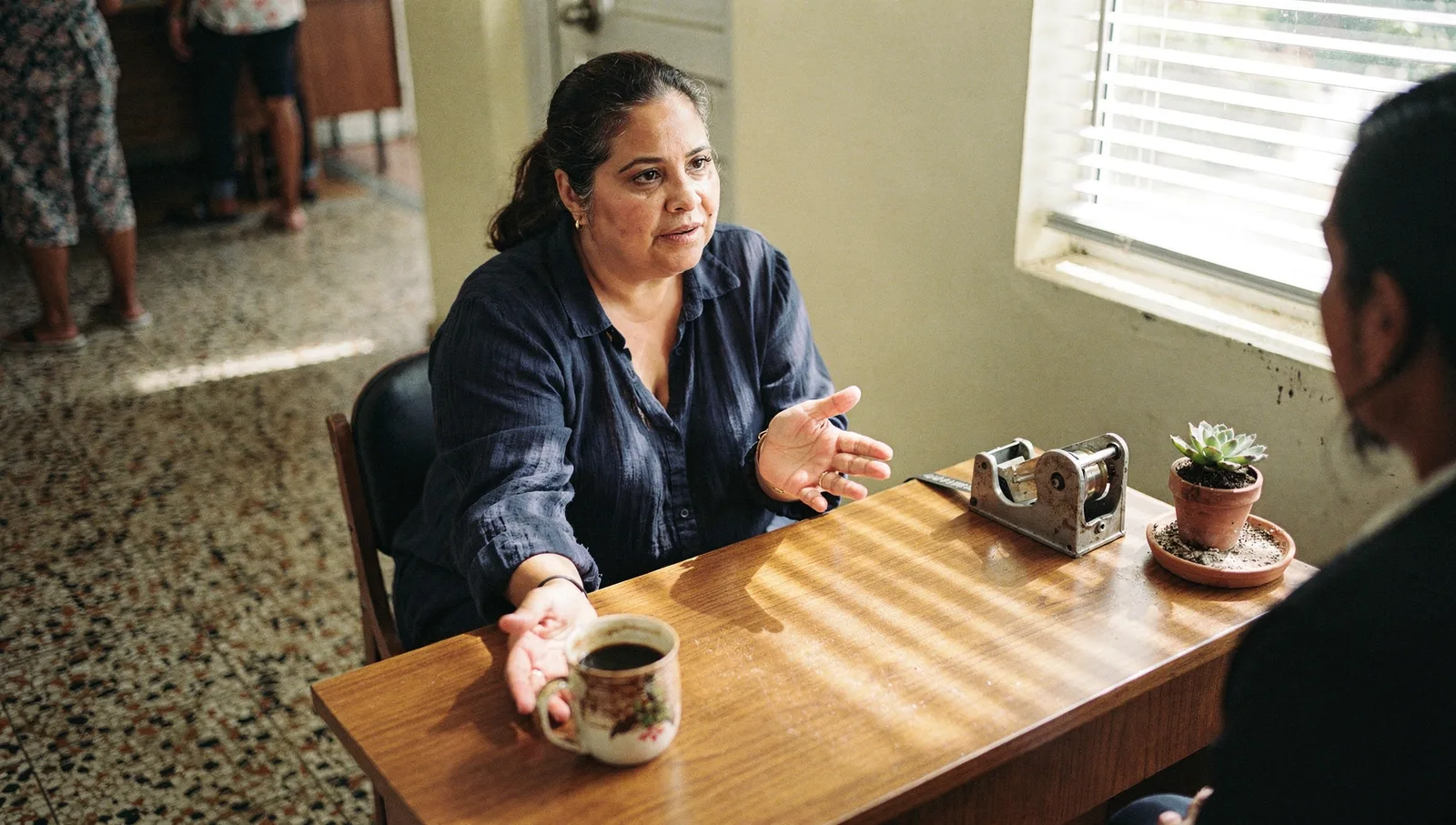
Selecting an external accounting partner requires a rigorous framework that looks beyond basic data entry. Many business owners mistake software dashboards for financial clarity, yet software only records the data it receives. A study published in SN Business & Economics on July 21, 2021, established that accounting service quality spans six core dimensions: advisory view, capability, efficiency, communication, technological innovation, and trustworthiness (pmc.ncbi.nlm.nih.gov). Evaluating a provider across these specific operational capabilities ensures that your financial records actively support business decisions rather than functioning merely as an archival ledger.
| Service Quality Dimension | Operational Evaluation Focus |
|---|---|
| Advisory View | Translating balance sheets into operational decisions (pmc.ncbi.nlm.nih.gov) |
| Capability | Core competency in accounting frameworks and reconciliations (pmc.ncbi.nlm.nih.gov) |
| Efficiency | Timely delivery of closed monthly books (pmc.ncbi.nlm.nih.gov) |
| Communication | Clear explanations provided in plain language (pmc.ncbi.nlm.nih.gov) |
| Technological Innovation | Competence with modern platforms like QuickBooks (pmc.ncbi.nlm.nih.gov) |
| Trustworthiness | Diligent handling of sensitive banking records (pmc.ncbi.nlm.nih.gov) |
Comparing Online Bookkeeping Pricing and Service Models#

Virtual models rely heavily on standardized algorithms to categorize high-volume transactions, which can present limitations when your business model requires customized billing workflows or nuanced job costing.
When evaluating these options, small business owners should address several operational questions:
- Does the provider require bringing historical backlogs current under a separate cleanup scope before commencing monthly maintenance?
- Are financial reviews delivered through interactive, plain-language walkthroughs, or merely delivered as uninterpreted dashboard exports?
- Does the firm maintain a strict boundary separating bookkeeping maintenance from certified tax preparation?
Clarifying these operational boundaries early protects your business from unexpected scope gaps at year-end.
Core Functions and Regulatory Purposes of Small Business Bookkeeping#
Federal compliance defines the operational foundation for any commercial recordkeeping system. Under IRS Publication 583, a business bookkeeping system can be organized using either a single-entry or a double-entry method (irs.gov). While single-entry systems record only receipts and disbursements, double-entry bookkeeping enforces structural integrity by logging equal debits and credits across assets, liabilities, and equity.
- Transaction execution
- Ledger categorization
- Account reconciliation
- Financial statement generation
IRS Publication 583 explicitly outlines six operational purposes for maintaining continuous business records:
- Monitoring the progress of your business (irs.gov)
- Preparing accurate financial statements
- Identifying the precise source of receipts
- Keeping track of deductible expenses
- Preparing annual tax returns
- Supporting items reported on filed tax returns
Net Taxable Income = Gross Receipts - Allowable Deductible Expenses
Tracking these entries systematically throughout the operating year ensures that deductions remain fully substantiated, transforming tax time from an administrative panic into an organized handover.
Small Business Survival Trends and Bookkeeping Practices#

Financial visibility correlates directly with sustained commercial viability. The same study established that only 30% of small businesses survive for 10 years or more. Operational failure frequently stems from poor visibility into operational margins, uncollected billing, and creeping overhead.
Once a persistent backlog of unreconciled accounts or missing receipts appears, that is the point to bring in professional bookkeeping services help. Bringing records current allows an owner to evaluate actual gross profit margins against monthly overhead expenses, replacing guesswork with verified transactional data.
Structuring the Chart of Accounts for Financial Reporting#
A standardized chart of accounts organizes financial reporting into logical, easily readable categories. According to accounting implementation documentation from Rand Group, most organizations structure chart of accounts numbering using ranges such as 1000 to 1999 for assets, 2000 to 2999 for liabilities, and 3000 to 3999 for equity (randgroup.com). This standardized architecture provides the necessary framework for consistent month-end close procedures and accurate balance sheet reconciliation.
Total Assets (1000–1999) = Total Liabilities (2000–2999) + Total Equity (3000–3999)
Logical numbering hierarchies group operational performance into natural reporting divisions:
4000: Product Revenue
4100: Service Revenue
6100: Payroll
6200: Marketing
Implementing this numerical structure enables leadership to trace fluctuations in operating margins directly back to specific operational categories without manual transaction audits.
Managing Cash Flow and Billing Operations#
Effective cash flow management involves tracking the money entering and leaving an enterprise to clarify its financial standing, detect potential cash shortfalls, and prepare for future expenses (oregonsbdc.org). A profitable income statement does not protect a firm if revenue remains uncollected while fixed operating costs fall due.
Operating Cash Flow = Total Inflows - Operating Disbursements
Operational billing workflows can be strengthened through three practical procedures:
- Issuing invoices immediately upon the delivery of services (oregonsbdc.org)
- Establishing definite payment terms directly on customer contracts
- Scheduling automated payment reminders to prompt prompt settlement
Regularly updating your receivables ledger ensures management can forecast cash requirements accurately and manage working capital effectively.
Establishing Internal Controls and Separation of Duties#
Internal controls protect small enterprises from clerical errors and internal misappropriation. General internal control guidance from the UCLA Corporate Accounting department establishes that approval, accounting/reconciling, and asset custody functions should be separated among employees (finance.ucla.edu). When these core responsibilities rest with a single individual, the risk of undetected transactional discrepancies rises substantially.
Internal control frameworks require that at least two sets of eyes review any transaction, meaning that no single person should initiate, approve, record, reconcile, handle assets for, or review a transaction (finance.ucla.edu). In smaller departments where these duties cannot be fully separated, a detailed supervisory review of related activities is required as a compensating control activity. Enforcing dual oversight over payment disbursements and bank statements ensures organizational transparency.
Executing an Accounting System Cutover and Migration#
Migrating an organization's financial records between software platforms requires structured execution to maintain ledger integrity. Setting an accounting system cutover date at the start of a fiscal year or fiscal quarter ensures that data before the cutover resides in the legacy system. And data after resides in the new system without partial-period splits (business.com). This cutover scheduling protects multi-period reporting comparisons from data fragmentation.
Recording itemized balances preserves individual invoice resolution and maintains an accurate audit trail. Before decommissioning the legacy system, businesses should run both platforms simultaneously in parallel and reconcile a full month to confirm that the financial results match.
To establish reliable financial reporting for your business, complete these practical steps this week:
- Conduct an audit of your existing accounts to identify any backlog of unclassified transactions.
- Separate historical cleanup projects from your ongoing monthly ledger maintenance.
- Establish a standard chart of accounts using consistent numerical ranges across all categories (randgroup.com).
- Enforce dual-review controls over check disbursements and bank reconciliation statements (finance.ucla.edu).
For established service businesses operating across Coral Gables, Doral, and Fort Lauderdale, Pau Bookkeeping provides professional monthly bookkeeping in English or Spanish, ensuring your core ledger is clean, balanced, and ready for your tax accountant.
| Financial Category | Standard Number Range | Representative Hierarchy Code | Category Function |
|---|---|---|---|
| Assets | 1000 to 1999 | 1000s | Resources and property owned by the business |
| Liabilities | 2000 to 2999 | 2000s | Debts and financial obligations owed to external parties |
| Equity | 3000 to 3999 | 3000s | Residual interest and retained business value |
| Revenue | 4000+ | 4000 (Product), 4100 (Service) | Earnings generated from sales and service activities |
| Operating Expenses | 6000+ | 6100 (Payroll), 6200 (Marketing) | Ongoing costs necessary to operate the business |
| Core Function | Primary Responsibility | Prohibited Overlapping Action | Small-Team Compensating Control |
|---|---|---|---|
| Approval | Authorizing purchase requisitions and billing commitments | Reconciling financial reports or holding custody of checks | Detailed supervisory review of related activities |
| Accounting / Reconciling | Recording ledger entries and balancing bank accounts | Possessing check custody or executing disbursements | Dual-oversight review requiring two sets of eyes per transaction |
| Asset Custody | Receiving, handling, and depositing funds or checks | Opening incoming mail and maintaining AR ledgers | Secondary management review of bank balances and receipts |
Bookkeeping Outsourcing vs. DIY Cost Calculator
Compares the true monthly and annual opportunity cost of DIY bookkeeping (business owner time spent * billable or opportunity hourly rate) against the cost of an outsourced monthly bookkeeping service.
Monthly DIY Time Cost:
Net Monthly Savings (Opportunity):
Net Annual Value Gained:
Frequently Asked Questions
How to keep bookkeeping records for a small business?
Under IRS Publication 583, bookkeeping records can be kept using single-entry or double-entry methods to monitor progress, track deductible expenses, identify receipt sources, prepare financial statements, and substantiate filed tax returns.
What internal controls are required for small business bookkeeping?
Internal controls require separating approval, accounting/reconciling, and asset custody. No single person should initiate, approve, record, reconcile, and review transactions; at least two sets of eyes are required to prevent errors and fraud.
How should a small business migrate to a new accounting system?
Set the cutover date at the start of a fiscal year or quarter, migrate open AR and AP invoices individually with original details, and run both systems in parallel for a fully reconciled month.
How should a small business structure its chart of accounts?
According to Rand Group best practices, accounts are grouped into numerical ranges: 1000 to 1999 for assets, 2000 to 2999 for liabilities, 3000 to 3999 for equity, 4000s for revenues (e.g., product or service), and 6000s for operating expenses.
Disclaimer
Pau Bookkeeping provides bookkeeping, not tax or legal advice. Heidi is not a CPA and does not prepare or file tax returns; talk to a licensed tax professional about your specific situation.
Sources
- www.irs.gov - irs.gov (2024-12-01)
- The dimensions of accounting service quality - pmc.ncbi.nlm.nih.gov (2021-07-21)
- Exploring the Role of Bookkeeping in Business Success - scholarworks.waldenu.edu
- Segregation of Duties (Preventive & Detective) | Business & Finance Solutions - finance.ucla.edu
- How to Switch Accounting Systems Safely - business.com
- How to Manage Cash Flow in Slower Months - Oregon Small Business Development Center Network - oregonsbdc.org
- Chart of accounts structure: Best practices for better reporting and scalable growth | Rand Group - randgroup.com