
Bookkeeper vs Accountant: Roles, Costs & Differences
Short answer
To optimize professional costs, pair a bookkeeper for day-to-day transaction records with an accountant for analytical review and tax planning. Bookkeepers maintain accurate financial data by computing, classifying, and recording transactions. Accountants review and analyze those records to advise on business decisions. Using a bookkeeper for ongoing ledger maintenance helps keep records clean and can keep routine data entry from being billed at higher accounting rates.

Treating bookkeeping and accounting as interchangeable roles inflates professional fees and creates compliance bottlenecks at year-end. Operating efficiency requires viewing bookkeeping as the upstream foundation that captures transactional reality, whereas accounting extracts strategic insights from those records. Bookkeepers, accounting clerks, and auditing clerks compute, classify, and record data to help organizations maintain complete and accurate financial records (bls.gov). Accountants review, analyze, and interpret those financial records to advise on business decisions (uscareerinstitute.edu).
| Operational Attribute | Bookkeeper | Professional Accountant / CPA |
|---|---|---|
| Primary Scope | Computes, classifies, and records daily transactions (bls.gov) | Reviews, analyzes, and interprets financial records (uscareerinstitute.edu) |
| Specialization Options | Accounting clerk, auditing clerk, specialist (uscareerinstitute.edu) | Government, management, public, internal or external auditor |
| Education Path | High school diploma up to college coursework (bls.gov) | 150 college semester hours required for CPA (bls.gov) |
| IRS Representation | None beyond return preparation (PTIN required) (irs.gov) | Unlimited representation rights for CPAs |
| Audit & SEC Filings | Enters data without compliance analysis (phoenix.edu) | Conducts audits; CPA license required for SEC filings (online.uc.edu; bls.gov) |
Core Operational Differences Between Bookkeepers and Accountants#
Bookkeepers record the operational history of a company, while accountants evaluate that history to forecast and guide future performance. They enter figures and verify mathematical correctness without analyzing the records beyond basic verification (phoenix.edu).
- Transaction occurs
- Bookkeeper classifies entry
- Reconciliation in QuickBooks
- Accountant analyzes reports
- Strategic business decisions
Accountants utilize the general ledger and financial statements prepared upstream to advise management. Professionals pursuing an accounting path can specialize as management accountants, government accountants, public accountants, internal auditors, or external auditors.
An established service business gains clarity by separating data maintenance from analytical interpretation. Paying higher CPA or accounting billable rates to handle routine transactional clean-up and clerical bookkeeping burns costly billable hours on basic tracking. Conversely, using transactional data without structured financial review leaves business decisions untethered from performance metrics.
Education and Professional Credential Requirements#
Entry paths for bookkeeping positions focus on practical task execution rather than formal academic degree completion. Educational standards for bookkeeping, accounting, and auditing clerks vary across organizations: some employers require or prefer candidates who have completed college coursework or an accounting degree, while other employers hire candidates holding a high school diploma (bls.gov). On-the-job training frequently provides the requisite software and ledger mechanics for these roles.
By comparison, the Certified Public Accountant (CPA) credential demands extensive collegiate study and standardized examination. Every state Board of Accountancy requires CPA candidates to complete 150 semester hours of college coursework (bls.gov). In addition to these 150 semester hours, candidates must pass a comprehensive national examination and satisfy state-level professional criteria to earn their license.
Tax Preparation Authority and IRS Representation Rights#
Federal tax preparation requirements diverge sharply from taxpayer representation privileges during agency disputes. Under federal regulations, any tax professional possessing an active IRS preparer tax identification number (PTIN) is legally authorized to prepare federal tax returns (irs.gov). This allows qualified non-credentialed preparers and bookkeepers with a PTIN to assemble and file returns for business clients.
Representation rights before the agency carry strict credentialing boundaries:
- Unlimited Representation Rights: Enrolled agents, certified public accountants, and licensed attorneys maintain full authorization to represent taxpayers on any tax issue, including audits, collections, and formal appeals (irs.gov).
- Limited Representation Rights: Preparers holding only an active PTIN may prepare returns but cannot advocate for taxpayers across broader audit disputes or collection proceedings.
Clean, disciplined monthly bookkeeping solves the financial scramble long before tax filing season arrives. When an independent bookkeeper reconciles the chart of accounts and maintains clean books in QuickBooks, the external CPA receives verified, structured schedules. This clear handoff allows the tax professional to focus on optimization and representation without incurring premium CPA rates for transactional clean-up, as covered above.
Regulatory Compliance, Auditing, and Reporting Standards#
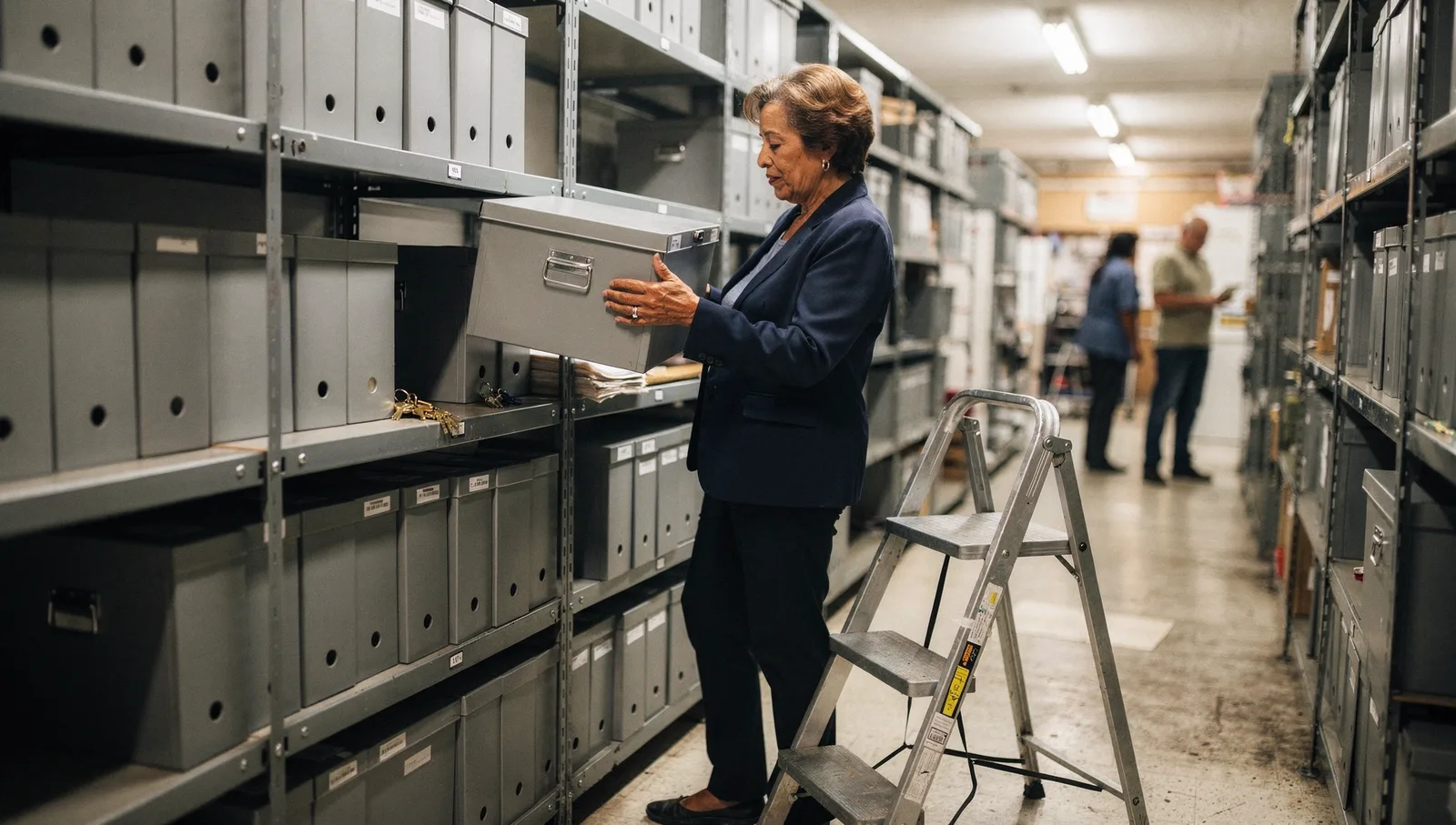
Statutory oversight separates operational data entry from formal attestation and assurance engagements. In the accounting profession, compliance centers on upholding strict accounting standards and statutory regulations to safeguard organizational transparency and financial integrity (online.uc.edu). An accountant's responsibilities include verifying that financial records comply with relevant regulations and standards, as well as potentially completing tax returns (phoenix.edu).
Cost Allocation Formula: Total Engagement Cost = (Bookkeeping Hours × Operational Rate) + (Accounting Hours × Advisory Rate)
Bookkeepers record transactional details such as spending, cash flow, and income into software systems, but they work with raw financial data and do not provide insights into regulatory compliance or operational performance (phoenix.edu). Bookkeepers may generate internal, nonpublic financial reports such as balance sheets, but formal compliance verification remains outside their typical scope.
Auditing and public company reporting require formal professional status:
- Auditing Functions: Internal and external auditors review organizational records to verify data accuracy and regulatory compliance, delivering objective assurance to stakeholders (uscareerinstitute.edu; online.uc.edu).
- Statutory SEC Filings: Any accountant who files a formal report with the Securities and Exchange Commission (SEC) is legally mandated to hold an active Certified Public Accountant license (bls.gov).
Impact of Automation on Bookkeeping and Accounting Functions#
Accounting software has shifted the operational division of labor across the financial management vertical. Modern software platforms automate many routine transactional functions historically performed by bookkeepers (franklin.edu). Cloud platforms synchronize banking feeds, categorize repetitive transactions, and balance journal ledgers, altering the day-to-day administrative burden.
Despite software automation, human expertise remains essential across both disciplines:
- Interpretive Analysis: While software efficiently processes repetitive transaction data, accountants deliver contextual insights and advisory analysis that automated tools cannot duplicate (franklin.edu).
- Data Verification: Automated rules frequently miscategorize non-standard payments, requiring bookkeepers to monitor classification, verify entries, and correct automated errors.
Business owners do not need more uncurated dashboards; they need accurate, reconciliated books and a professional who clearly explains what monthly revenue, expenses, and profit figures indicate for upcoming decisions. Evaluating your current administrative workflow requires assessing whether operational data entry is cleanly separated from professional tax advisory:
- Review last year's accounting bills to see how much was spent paying higher CPA rates for routine clerical clean-up, as addressed above.
- Verify that your monthly bank, credit card, and loan accounts are fully reconciled through the current period.
- Establish a recurring monthly bookkeeping schedule to supply reconciled reports directly to your tax advisor.
Pau Bookkeeping manages monthly books in QuickBooks for established service businesses in Hialeah and throughout Miami-Dade County, Florida, resolving backlogs through dedicated catch-up projects before transitioning to ongoing monthly reviews.
| Role | Primary Responsibility | Educational Standard | Analysis & Reporting Scope | IRS Representation Rights |
|---|---|---|---|---|
| Bookkeeper | Computes, classifies, and records daily transactions | High school diploma to college coursework | Enters raw data; creates internal reports without compliance analysis | Limited to return preparation with an active PTIN |
| Accountant / CPA | Reviews, analyzes, and interprets financial records | 150 college semester hours required for CPA license | Evaluates compliance, audits records, and advises on decisions | Unlimited representation rights for CPAs on all tax matters |
| Specialty / Credential | Primary Function | Mandatory Licensure or Credential | IRS Representation Level |
|---|---|---|---|
| Bookkeeping Clerk | Records transactions and maintains ledger accuracy | None (on-the-job training or coursework) | None (PTIN required to file returns) |
| Certified Public Accountant (CPA) | Audits records, analyzes reports, advises management | State license, national exam, 150 semester hours | Unlimited representation rights |
| Auditor (Internal / External) | Reviews data for accuracy, integrity, and compliance | Varies; CPA required if filing SEC reports | Unlimited only if holding CPA or legal credential |
| PTIN Tax Preparer | Calculates and submits federal tax returns | Active Preparer Tax Identification Number (PTIN) | Limited representation rights |
Bookkeeper vs. Accountant Cost Allocation Calculator
Compare the financial impact of utilizing a blended bookkeeping and CPA model versus hiring a CPA or professional accountant for routine data entry tasks.
Blended Model Monthly Cost:
All-CPA Model Monthly Cost:
Annual Savings with Blended Model:
Frequently Asked Questions
Can a bookkeeper prepare federal tax returns?
Yes. Any tax professional who holds an active IRS preparer tax identification number (PTIN) is legally authorized to prepare and file federal tax returns.
Who can represent a taxpayer before the IRS during an audit?
CPAs, enrolled agents, and licensed attorneys have unlimited representation rights before the IRS for audits, appeals, and collection issues. Preparers with only a PTIN hold limited rights.
What are the education requirements to become a CPA?
All states require CPA candidates to complete 150 semester hours of college coursework, pass a standardized national examination, and meet specific state board criteria.
Why are accountants needed if software automates bookkeeping?
Software automates repetitive transactional entries, but accountants provide strategic guidance, interpret financial health, assess performance metrics, and verify regulatory compliance that automated programs cannot replicate.
Disclaimer
Pau Bookkeeping provides bookkeeping, not tax or legal advice. Heidi is not a CPA and does not prepare or file tax returns; talk to a licensed tax professional about your specific situation.
Sources
- Bookkeeping, Accounting, and Auditing Clerks : Occupational Outlook Handbook: : U.S. Bureau of Labor Statistics - bls.gov
- Bookkeeping vs Accounting: Understanding the Differences | U.S. Career Institute - uscareerinstitute.edu
- Bookkeeper vs. Accountant: Comparing Careers and Growth - franklin.edu
- Bookkeeping vs. Accounting: What Are the Differences? - online.uc.edu
- Bookkeeper vs Accountant As A Career | University of Phoenix - phoenix.edu
- Understanding tax return preparer credentials and qualifications | Internal Revenue Service - irs.gov
- Accountants and Auditors : Occupational Outlook Handbook: : U.S. Bureau of Labor Statistics - bls.gov